CMS Proposes 3.2% Medicare Advantage Rate Boost for Fiscal 2027
The Centers for Medicare & Medicaid Services released preliminary payment rates that would increase insurer reimbursemen…

Priya Raghunathan


Policy moves fast.
Read it first.
Understand it fully.
Washington Policy Intelligence
Government policy distilled to sharp, readable briefings before the morning coffee cools.
For Capitol Hill staffers, municipal planners, and civics educators who need to understand policy — and act on it by 9 AM.
A bipartisan continuing resolution passed 68–29 early Wednesday, extending federal operations at current spending levels while appropriators negotiate full-year bills stalled since October.

Margaret Holloway
Senior Congressional Correspondent

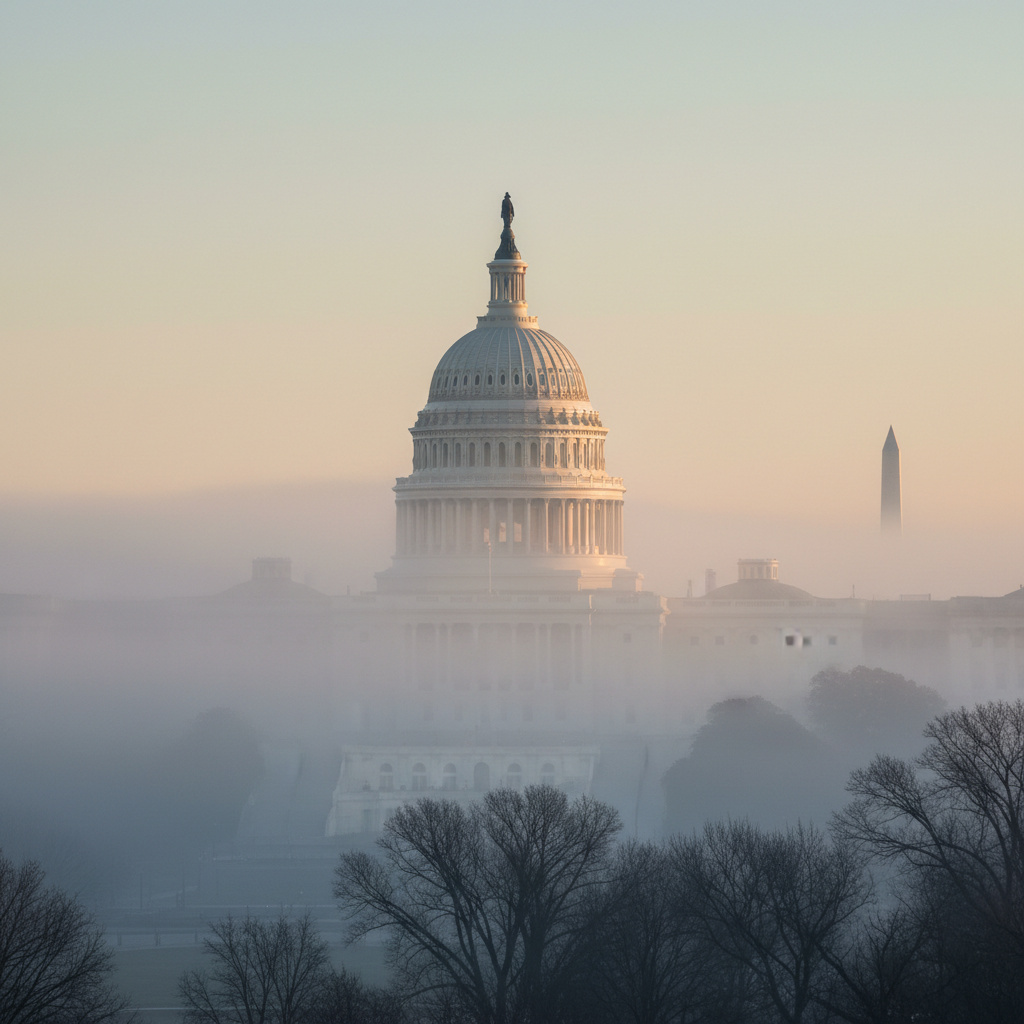
The Capitol at 5:47 AM, hours before the Senate vote. Photo: AP/Dispatch

The Centers for Medicare & Medicaid Services released preliminary payment rates that would increase insurer reimbursemen…

Priya Raghunathan
The Federal Highway Administration distributed the largest single tranche of Bridge Formula Program funds since the 2021…
James Okonkwo

The Defense Department's $917 billion request shifts $28 billion toward Indo-Pacific Command assets — submarines, long-r…

Col. (Ret.) Sandra Whitfield

“The stopgap is not a budget. It is a confession that the appropriations process has become a political hostage situation with no clear ransom note.”
— Thomas Abernethy, Editor-at-Large
For the twenty-third consecutive year, the United States federal government will not begin a fiscal year with all twelve appropriations bills enacted on time. Wednesday’s stopgap — the fourth since October — extends a streak that has quietly become the structural norm of American governance, not an emergency exception to it.
The consequences are not merely procedural. Federal agencies cannot sign multi-year contracts, hire permanent staff, or launch capital projects under continuing resolution authority. Infrastructure grants stall. Research grants freeze. Municipal planners waiting on FHWA or HUD disbursements learn, again, to schedule around congressional dysfunction.

This analysis is part of Dispatch’s ongoing Appropriations Watch series — 47 dispatches since October 2023.

Thomas Abernethy
Editor-at-Large · 14 years covering the Hill
Proposed outlays before reconciliation markup. Numbers reflect OMB baseline projections as of Feb 24, 2026.
Source: Office of Management & Budget, Feb 2026 Supplemental Tables

Congress has raised or suspended the statutory debt limit 78 times since 1960. Each episode is narrated as crisis. Each resolution is sold as restraint. Neither framing is honest.
Eleanor Nakamura
Contributing Editor, Fiscal Policy
You’ve read three full briefings.
Get the Morning Brief in your inbox before 7 AM, every weekday.